What does DNSSEC protect against?
When someone opens your website, their device first asks the DNS for the address of your server. Without protection, an attacker can forge this information and send the person to another server – even though your name is in the address bar. This is particularly sensitive for online shops, customer portals and anywhere passwords are entered.
How does the signature work?
With DNSSEC, every piece of information about your domain is signed with a secret key. The corresponding public key can be retrieved in the DNS. The requesting system checks the signature like a handwritten one: if it doesn't match, the answer is not used.
Who vouches for whom?
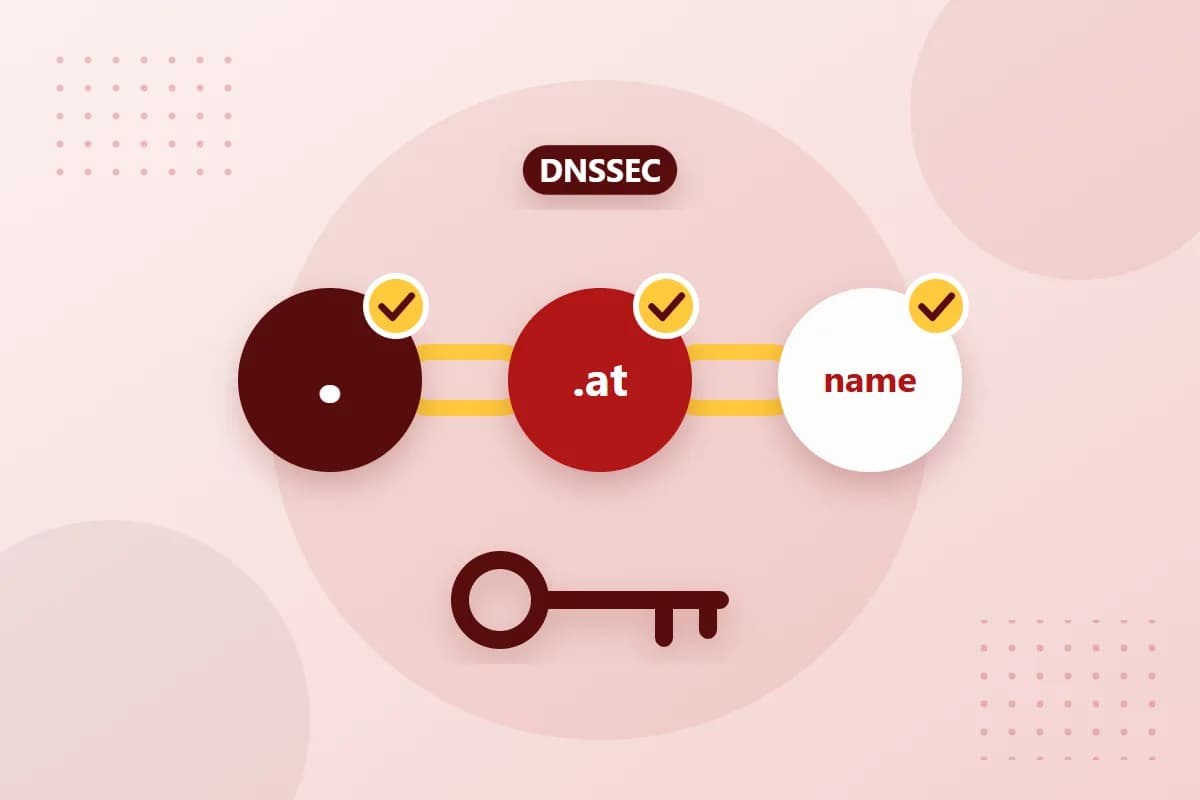
So that nobody can simply slip in a key of their own, there is a chain of trust. The top level of the DNS confirms the key of the .at extension, and nic.at confirms the key of your domain. Each link checks the next – like a certification that refers to another certification.
Do I have to do anything?
If you use the reg.at name servers, DNSSEC is active by default in the Domain-Robot. The keys are generated, renewed and stored at nic.at automatically. If you run your own name servers, you have to sign the zone yourself and have the key reference entered through your provider.
What happens when I change provider?
This is the only real pitfall. If your domain moves to other name servers, the key reference stored at nic.at must also be adjusted. If it no longer matches the new zone, every answer is considered forged – and your website suddenly cannot be reached by many users. So coordinate the change with both providers in advance.
Does DNSSEC replace an SSL certificate?
No. DNSSEC makes sure visitors find the right server. The SSL certificate then encrypts the connection to that server. For a secure website you need both.
Conclusion
DNSSEC is a silent protection that works in the background and keeps your customers away from fake pages. If you would like to know whether your domain is already secured, our support team will be happy to help.