Names for people, numbers for machines
Computers find each other via numerical addresses, known as IP addresses. Because nobody wants to remember such strings of numbers, there are domain names – and the Domain Name System (DNS), which translates between the two.
The journey of a request
- The browser asks. When someone types your-company.at, the device turns to a resolver, usually that of the internet provider.
- The root refers onwards. If this server doesn't know the answer, it asks the root servers of the DNS who is responsible for .at.
- nic.at knows your name servers. The servers of the Austrian registry know which name servers are registered for your-company.at.
- Your name servers answer. This is where the DNS zone of your domain with all its records is stored. The browser receives the IP address and opens your website.
So that this doesn't start from scratch with every request, the servers involved remember the answer for a certain time.
The records that matter
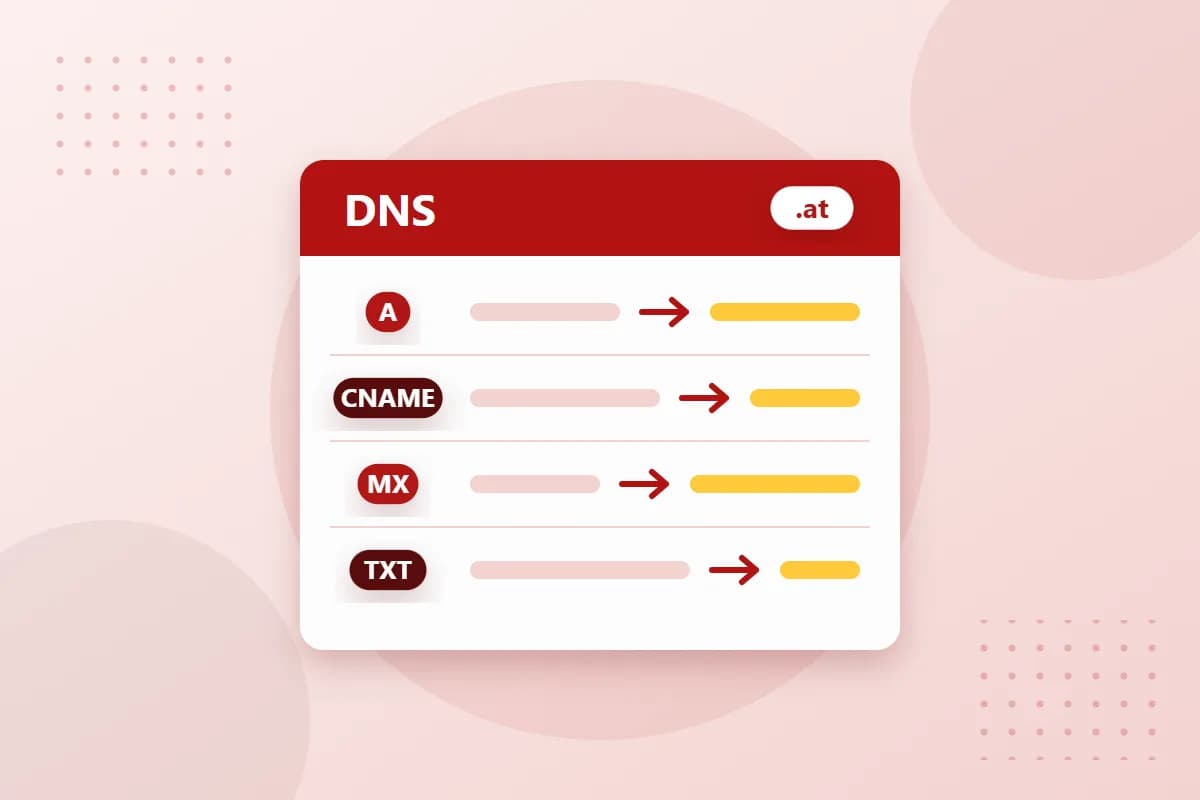
- A and AAAA give the address of the server hosting your website.
- CNAME points from one name to another, for example from www to the main address or from a subdomain to an external service.
- MX determines which server accepts email for your domain.
- TXT contains additional information, for example for spam protection with SPF or for verification with Google.
Why changes take time
Every record carries a lifetime, the TTL. This is how long other servers may use the old answer. If you change a record, some visitors will therefore still see the old state for a while. When moving, plan a time buffer and lower the TTL a few days beforehand.
Where you manage your records
The DNS zone is held by the provider whose name servers are registered for your domain. At reg.at you edit all records in the Domain-Robot. You can see the current state from outside with our DNS lookup. Before major changes, note down the old state – that way you can always go back.
Conclusion
The DNS works invisibly, but without it there would be neither your website nor your email. With the four most important records and a little patience when making changes, you are well equipped. If you have questions, our support team will help.