Regional extensions: home in the address
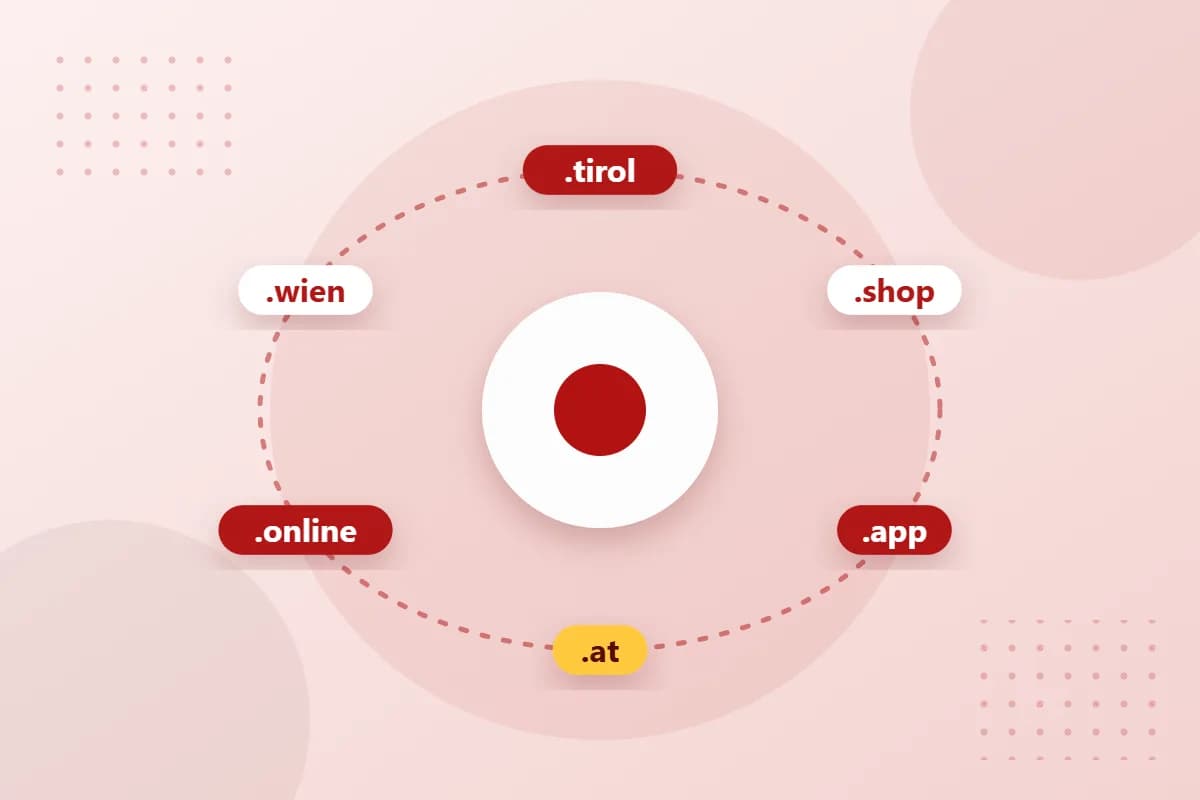
With .wien and .tirol there are two extensions that carry an Austrian region directly in the name. For a coffee house, a tour guide or a ski rental this can be appealing: the address says immediately where the business is at home. Especially in tourism, where guests search specifically for a region, this comes across as likeable and memorable.
Thematic extensions: say what you do
Extensions such as .shop, .online, .app or .immo describe a line of business. They are suitable for individual projects: the online shop next to the company website, the app for a product or a campaign page. Conveniently, short names are often still available here.
What speaks against them
- Habit: Austrians expect a .at address from local businesses. Unfamiliar extensions are more easily forgotten or mistyped.
- Costs: regional and thematic extensions usually cost considerably more than .at, and particularly sought-after names are traded as premium domains.
- Maintenance: every additional domain needs to be renewed, redirected and secured.
How search engines handle them
A country extension such as .at clearly assigns your website to Austria. Search engines, on the other hand, treat new extensions like generic ones – including regional ones such as .wien. For local visibility, other signals count for more anyway: your business profile, your address on the website and reviews.
A sensible strategy
- Your main address remains the .at domain with your company name.
- A regional or thematic extension supplements it where it really supports your marketing.
- Additional domains redirect permanently to the main site or a suitable subpage.
Conclusion
New extensions can give your presence local colour or a clear message, but they do not replace the tried-and-tested .at domain. You can see which extensions you can register with us and what they cost in the price list of our domain search.